
What is futures trading?
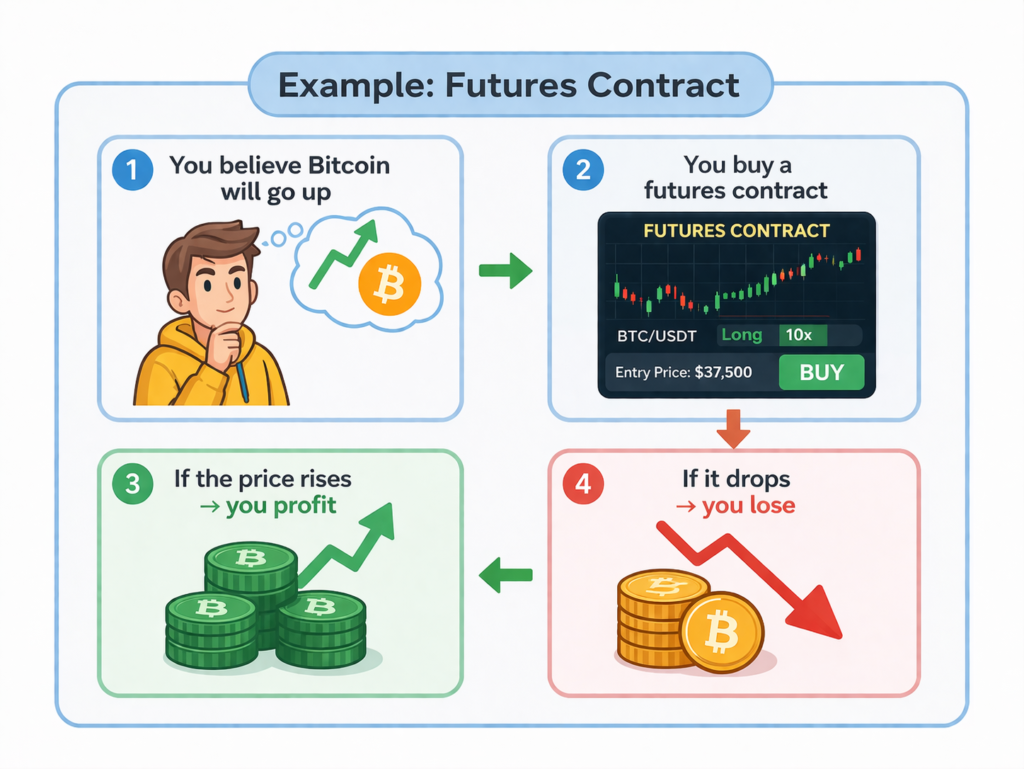
Futures trading is the process of buying or selling a contract that agrees to trade an asset at a fixed price on a future date.
👉 In simple terms:
You’re not buying the asset itself—you’re trading a contract based on its future price.
Why are beginners confused about futures trading?
If you’re searching what is futures trading, you’re probably thinking:
- “Why can I make money even when the market goes down?”
- “What is leverage and why is it risky?”
- “Why do people get liquidated so fast?”
👉 The truth:
Futures trading is powerful—but without understanding it, most beginners lose money quickly.
How does futures trading work?
Futures trading is done on platforms like Binance or CME Group.
Here’s how it works:
1. You choose an asset
This could be:
- Crypto (Bitcoin, Ethereum)
- Commodities (gold, oil)
- Indices (S&P 500)
2. You choose direction
- Long → you expect price to go up
- Short → you expect price to go down
👉 This is why you can profit in both markets
3. You use leverage
Leverage lets you control a larger position with less money.
Example:
- You have $100
- Use 10x leverage → control $1,000
4. Profit or loss is calculated
- Price moves in your favor → profit
- Price moves against you → loss
If the loss is too big → liquidation
What is leverage in futures trading?
Leverage is the main reason people are attracted to futures trading—and also the main reason they lose money.
👉 It amplifies:
- Profits
- Losses
Example:
- 10x leverage
- Market moves 10% against you
→ Your account = wiped out
Why do most beginners lose money in futures trading?
This is the part no one tells you.
1. Overusing leverage
Beginners often use 20x–100x leverage → extremely risky
2. No risk management
No stop loss → instant liquidation
3. Emotional trading
Fear, greed, revenge trading
4. Not understanding how markets move
Trading without a system = gambling
👉 Reality:
Futures trading is not a shortcut to fast money—it’s a fast way to lose money if done wrong.
Futures trading vs spot trading
Spot trading:
- You buy the actual asset
- No leverage
- Lower risk
Futures trading:
- You trade contracts
- Use leverage
- Higher risk, higher reward
Is futures trading safe?
Futures trading is not safe for beginners without proper knowledge.
Risks include:
- Liquidation
- High volatility
- Over-leveraging
- Emotional decisions
👉 You should:
- Start with low leverage (or none)
- Use stop loss
- Trade small size
Can you make money with futures trading?
Yes—but only if you:
- Have a clear strategy
- Control risk
- Stay consistent
👉 The goal is not to win big
👉 The goal is to survive and grow over time
A smarter way to start (important)
If you’re just starting, jumping into futures trading too early is one of the biggest mistakes.
Before that, you should understand:
- How trading actually works
- How markets move
- How to manage risk
If you want to build a solid foundation, check out our trading for beginners guide, where everything is explained step by step in a simple and practical way.
Final thoughts
Futures trading is one of the most powerful tools in the market—but also one of the most dangerous.
For beginners, the best approach is:
- Learn first
- Trade small
- Avoid high leverage
Because in trading, staying in the game matters more than chasing quick profits.
If you’re serious about making money (not just trying), you need a clear framework.
👉 Read this next:
Trading for Profit: Core Principles That Actually Work